Eliminating Whole Effluent Toxicity
Troubleshooting · Regulatory compliance
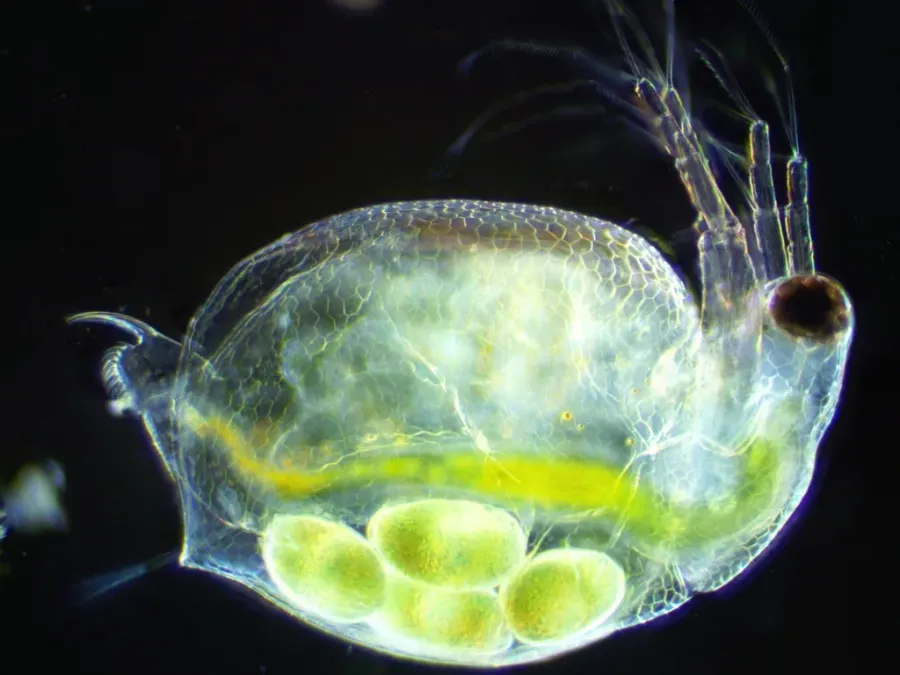
An effluent that passed the tests, but failed the Ceriodaphnia dubia.
A confidential paper mill was planning a new manufacturing process in an existing facility and was concerned the new wastewater would push its discharge into unacceptable whole effluent toxicity (WET) — measured as acute toxicity to Ceriodaphnia dubia in 100% effluent. The plant is treated by an aerated lagoon system with several lagoons in series.
The site already ran a similar process known to cause toxicity and had installed a pretreatment step for it, yet it was still seeing intermittent WET noncompliance and suspected the existing process waste at higher production rates. The client had to decide whether to install that same pretreatment again — or find a better use of the capital.
Simulate the lagoons before spending the capital.
Rather than assume the new process was to blame, Mr. McKinnon recommended a pilot-plant simulation of the lagoon system. Three pilot plants were run in parallel and spiked with varying levels of the new wastewater, aerated and monitored so operating conditions matched the full-scale lagoons. Whole effluent toxicity was tested at retention times that simulated passage through the lagoons, and the plant’s biocides were tested as a possible cause.
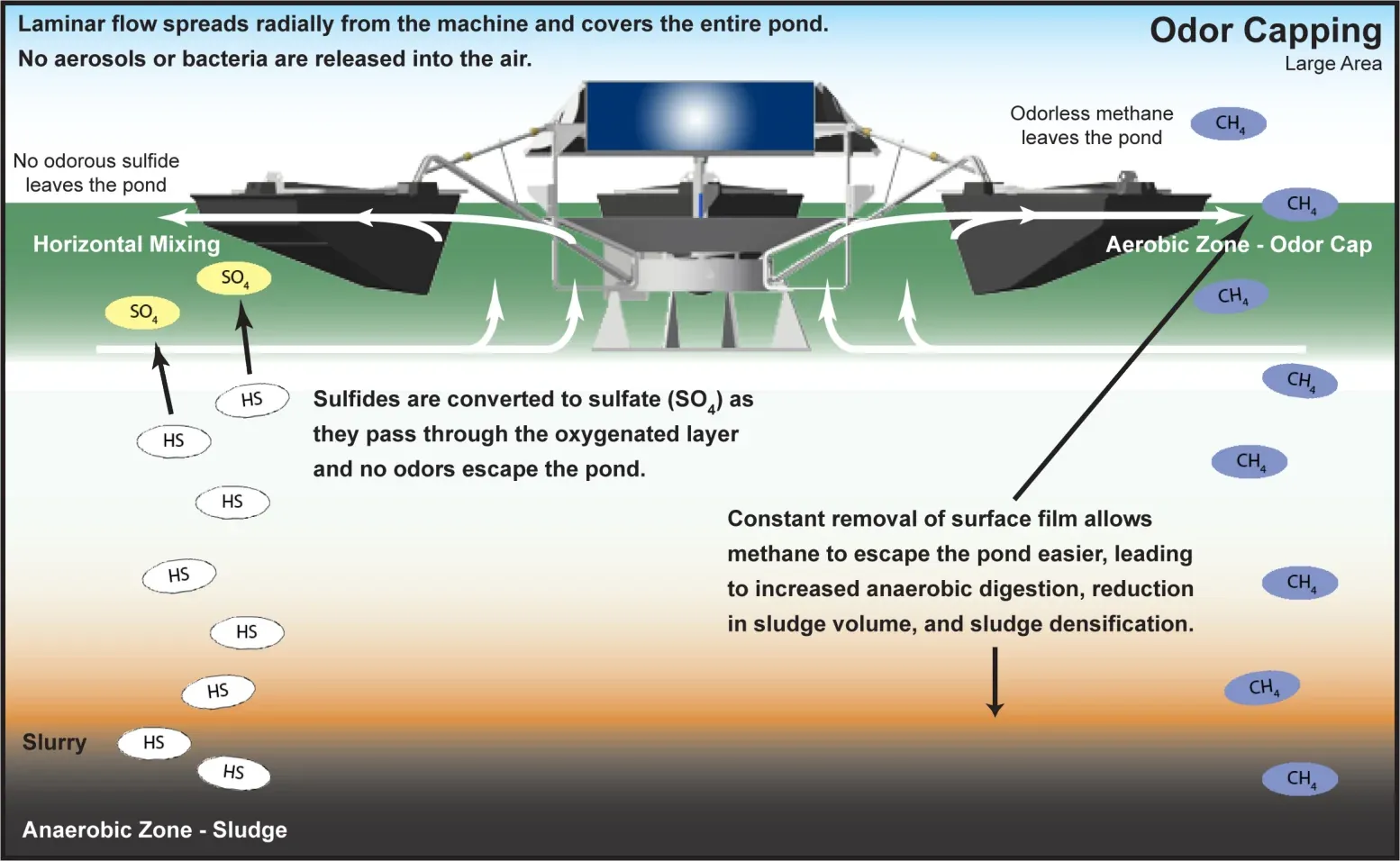
The results showed the combined wastewaters were fully treated as they passed through the system — all toxicity was removed before the final lagoon. That pointed the investigation squarely at the final, unaerated lagoon, where anaerobic conditions were generating sulfides at levels high enough to cause the intermittent WET failures.
Fix the root cause, not the symptom.
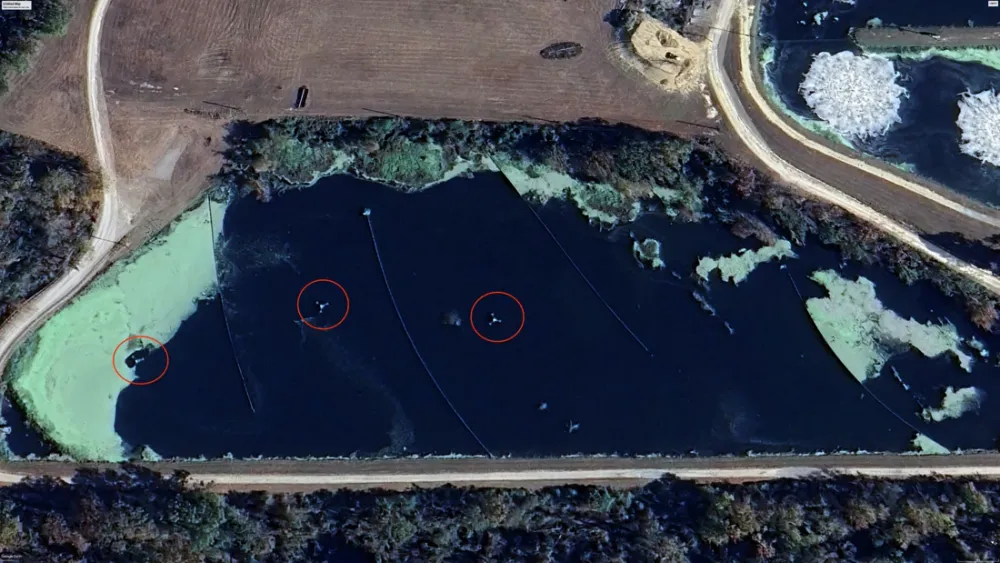
Mr. McKinnon recommended dropping the pretreatment plan and applying the capital to the real problem in the final lagoon. After evaluating options for sulfide elimination, he specified floating surface aerators powered by solar — the final lagoon sits far from an adequate power supply, and solar-powered units designed specifically for sulfide reduction were available.
The client installed three SolarBee floating solar aerators in separate sections of the lagoon. They create a shallow surface current that aerates the surface layers and oxidizes the sulfides. Since the aerators were installed, the facility has reported no further whole effluent toxicity episodes — at a fraction of the cost of another pretreatment plant.